Bridge House
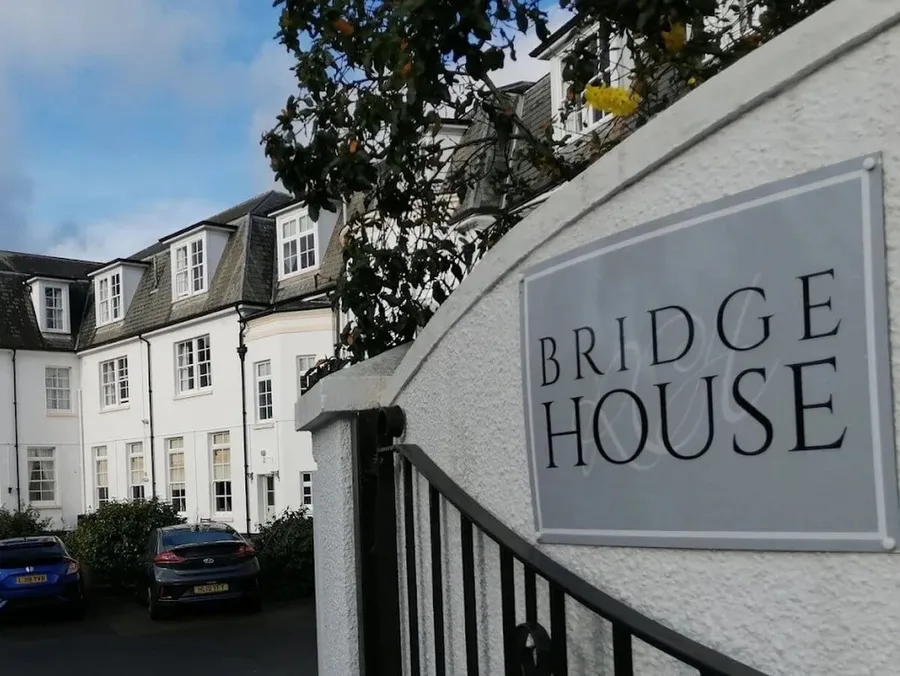
Bridge House occupies a spot on Church Street in Dawlish, a coastal town in Devon known for its red sandstone cliffs and sandy beaches. The structure dates back to 1793, when it was constructed as a residence for John Davy Foulkes and his wife Elizabeth, whose father held the title of Lord of the Manor in the area.
Originally a modest yet elegant family home, it featured typical Georgian elements such as symmetrical facades and sash windows, reflecting the architectural trends of the late 18th century. Over the years, expansions added to its size, including outbuildings and gardens that eventually spanned around four acres. These grounds provided seclusion amid the town’s growing popularity as a seaside destination during the Victorian era, when railways brought more people to the region.
In the early 20th century, the property shifted purpose, becoming part of the Railway Convalescent Homes network. This charity, established to support railway workers recovering from illness or injury, transformed Bridge House into a retreat for rest and recuperation.
For decades, it welcomed guests from the transport sector, offering rooms with views over the lawns and proximity to Dawlish’s attractions, such as the Lawn with its famous black swans and the nearby museum showcasing local artefacts.
The home later opened its doors wider, accepting anyone in need of post-hospital care, including couples seeking a quiet break.
Dawlish itself provides context for Bridge House’s appeal. The town sits along the South West Coast Path, with walks leading to Coryton Cove or up to the Warren, a nature reserve teeming with wildlife. Public transport links, including the railway station a short distance away, make it accessible from Exeter or Torquay. Nearby, Teignmouth offers boat trips, while Exmouth boasts broader sands for those exploring further afield. The property’s location, just half a mile from the town centre, allowed easy strolls to shops, cafes, and the brook that runs through the heart of Dawlish.
Operations at Bridge House ceased in spring 2020 amid the pandemic, with the closure initially temporary. However, the Railway Convalescent Homes charity later confirmed it as permanent, marking the end for the last such facility in the network. Plans now focus on redevelopment into independent living units, similar to almshouses, to support the community in a different way. The project, estimated at over six million pounds, aims to preserve the building’s heritage while adapting it for modern needs.
Though no longer operational as accommodation, Bridge House remains a point of interest for those tracing Dawlish’s past. Its exterior, visible from the street, hints at the town’s layered history, from Georgian origins to its role in welfare provision. Local history groups often reference it in trails, connecting it to broader stories of the area’s development. For anyone passing through, a detour to Church Street reveals this piece of architecture amid the everyday rhythm of the town.
Bridge House
2 Church Street
Dawlish
EX7 9AU